
How to Create a Digital Marketing Strategy for a Small Business
You have created a website, opened a social media account, and perhaps even published a few posts. But enquiries are inconsistent, website traffic is limited, and it is difficult to tell which marketing activities are making a difference.
This is a common challenge for small businesses. Marketing without a plan can lead to scattered efforts, inconsistent messaging, and money spent on activities that do not support business goals.
A digital marketing strategy for a small business helps you decide whom to reach, which channels to use, what content to create, and how to measure progress.
For a broader overview, explore my guide to digital marketing strategies for small businesses.
Semrush’s digital marketing strategy guide emphasises understanding the audience and connecting marketing activities to business objectives. Here’s how to turn that principle into a practical plan for an Indian small business.
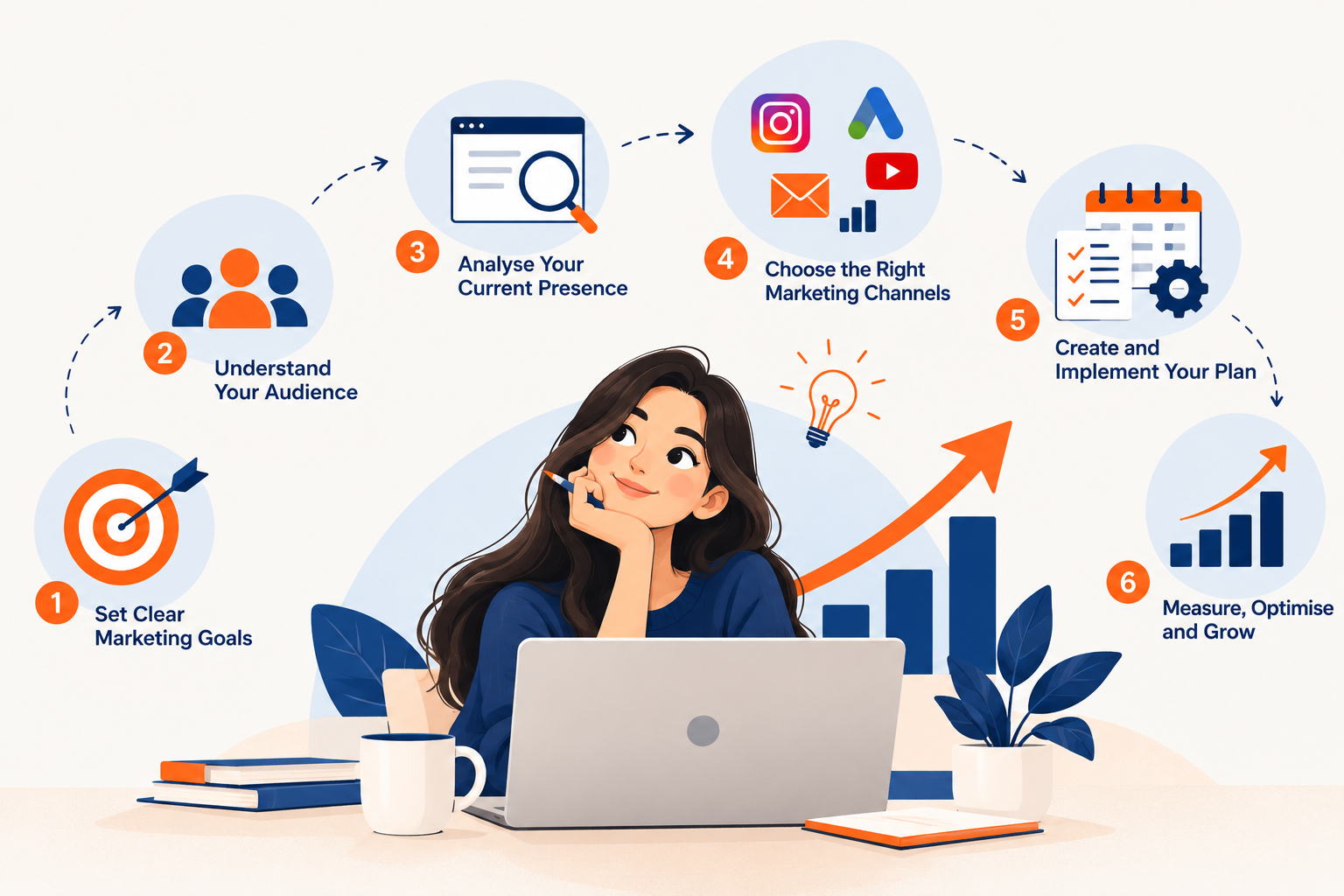
Step 1: Set Clear and Measurable Marketing Goals
Start by deciding what you want marketing to achieve. Your goals should reflect your business priorities rather than simply the number of posts you publish.
Common goals include:
- Increasing relevant website traffic.
- Generating enquiries for a service.
- Increasing online product sales.
- Improving local brand awareness.
- Encouraging repeat purchases.
Make your goals measurable and time-bound. For example, a local interior designer might aim to generate 10 qualified consultation enquiries per month within a three-month testing period.
This is a planning target, not a guaranteed outcome. Your results will depend on your offer, competition, budget, and conversion process.
HubSpot’s marketing strategy guide provides further guidance on connecting marketing plans with business objectives.
Step 2: Understand Your Target Audience
A strategy becomes more effective when you know whom you are trying to reach.
Consider a home-based skincare business. Its customers might want simple routines, clear ingredient information, and convenient delivery. A B2B consultancy might instead target founders who need specialist support and value professional credibility.
Research your audience through:
- Conversations with existing customers.
- Frequently asked questions and sales enquiries.
- Reviews of your business and competitors.
- Search queries and keyword research.
- Relevant discussions in online communities.
Identify your customers’ needs, concerns, budget considerations, and reasons for delaying a purchase. Use those insights to shape your content and offers.
Step 3: Analyse Your Current Online Presence
Before investing in new marketing activities, review what you already have.
Check whether your website explains your services clearly, works well on mobile devices, and includes an easy way to enquire. Review your social media profiles for consistent branding, useful information, and relevant content.
If you serve a local area, check whether your Google Business Profile is accurate and complete. Google’s Business Profile service allows eligible businesses to manage how they appear on Google Search and Maps.
Use Google Search Console to examine search impressions, clicks, and queries. Google Analytics can help you understand website traffic and relevant actions when configured correctly.
This audit gives you a starting point against which to measure future progress.
Step 4: Choose the Right Digital Marketing Channels
You do not need to use every available platform. Choose channels according to customer behaviour, business goals, and the resources you can consistently invest.
| Channel | Best suited for | Primary role |
|---|---|---|
| SEO | Businesses seeking organic discovery | Long-term search visibility |
| Visually driven products and services | Discovery and engagement | |
| Google Ads | Businesses targeting active search demand | Paid traffic and enquiries |
| Meta Ads | Businesses promoting offers to relevant audiences | Awareness, consideration, and leads |
| Content marketing | Businesses answering customer questions | Education and trust |
| Email marketing | Businesses with an opted-in audience | Follow-up and retention |
For example, a local dental clinic might prioritise local SEO and a well-structured website. A handmade accessories brand could focus on Instagram content, product pages, and customer referrals.
Start with one or two channels that match your business needs, then expand after reviewing the results. To compare your options in more detail, explore my guide to the best digital marketing channels for small businesses in India.
Step 5: Plan Your Content Around Customer Needs
Content should help customers move from discovering your business to understanding your offer and deciding whether it meets their needs.
Create a simple content plan containing:
- Educational content that answers common questions.
- Product or service demonstrations.
- Customer feedback and examples, used with permission.
- Frequently asked questions.
- Clear explanations of your process, pricing approach, or next steps.
A digital marketing consultant, for instance, could publish a guide to website SEO, a social media content calendar, and a case study explaining a real project.
Use keyword research to discover relevant topics, but prioritise usefulness and accuracy. Google’s people-first content guidance explains why content should primarily help people rather than be created just to manipulate search rankings.
Step 6: Set a Realistic Marketing Budget
Your budget should account for both direct expenses and the time required to execute the plan.
Potential costs include website hosting, content creation, design tools, freelance support, SEO services, and advertising spend.
Separate your budget into three categories:
- Foundations: Website improvements, analytics, and accurate business information.
- Ongoing marketing: Content creation, SEO, and social media management.
- Testing: A controlled budget for advertising or new campaigns.
There is no universal budget that works for every small business. A service provider with a narrow local audience may have different needs from an online store serving customers throughout India.
Start with an affordable amount, document your assumptions, and adjust based on evidence rather than copying another business’s spending.
If you are launching a new business or working with limited resources, read my guide on how to market a startup with a limited budget for practical, cost-conscious marketing ideas.
For a home-based business, these affordable digital marketing ideas for home-based businesses can also help you build visibility without investing in every available channel.
Step 7: Measure Performance and Optimise
Establish a baseline before launching your strategy. Then review the metrics that connect to your goals.
If your objective is to generate leads, track qualified enquiries and the percentage of enquiries that become customers. If your goal is organic growth, review relevant search impressions, clicks, and landing-page performance.
When results are weak, investigate the cause before changing everything. Low traffic may require better visibility or distribution. Traffic without enquiries may indicate unclear messaging, an unsuitable offer, or a difficult contact process.
Make one or two meaningful improvements at a time so you can better understand their impact.
A Simple 30-Day Action Plan
Week 1: Define your target audience, choose one primary business goal, and audit your online presence.
Week 2: Select your main marketing channels, research keywords, and improve essential website or profile information.
Week 3: Publish useful content and establish a consistent marketing schedule.
Week 4: Review traffic, enquiries, engagement, and conversion data. Identify what to continue, improve, or stop.
Repeat this process each month and allow sufficient time for longer-term activities, especially SEO, to develop.
Final Thoughts
A digital marketing strategy is not a list of platforms to maintain. It is a practical plan that connects your business goals with the right audience, useful content, suitable channels, and measurable outcomes.
Begin with the essentials, focus on what your customers need, and improve your approach as you learn.
Need a digital marketing strategy tailored to your business? Explore my digital marketing services for support with SEO, content planning, social media, performance marketing, and brand development. Let’s build a practical approach that fits your goals and helps your business grow.